The Quiet Drain on Your Wallet: How Medication Waste Accumulates—and How Smarter Delivery Can Help Reverse It
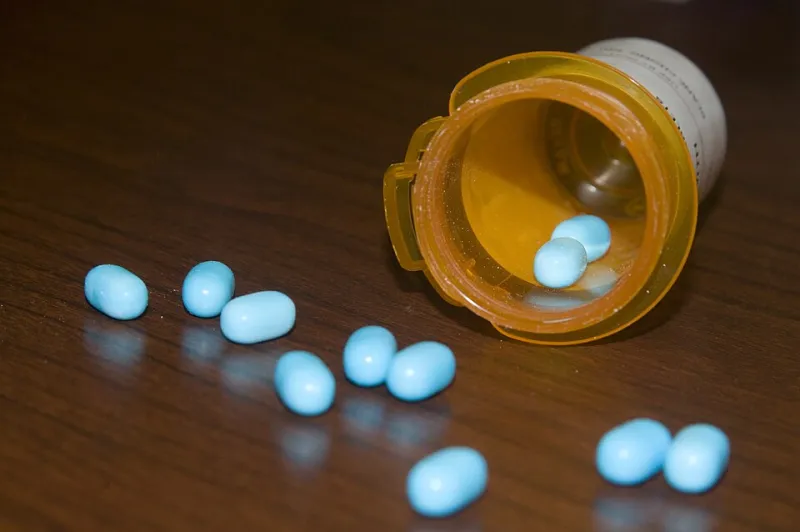
Photo: Christine Cabalo, Public domain, via Wikimedia Commons
Open the medicine cabinet in the average American home and you are likely to find a small archive of pharmaceutical decisions gone incomplete. A half-finished course of antibiotics. A blood pressure medication abandoned after side effects that were never discussed with a pharmacist. Three bottles of the same OTC pain reliever purchased at different times because no one could find the first two. A prescription filled in 2022 that expired quietly in the back row.
This is not an unusual household. It is, statistically speaking, a representative one.
Estimates from research published in health policy literature suggest that medication waste in the United States costs the healthcare system between $200 billion and $300 billion annually when accounting for drugs that are dispensed but never taken, treatments that are abandoned before completion, and therapeutic failures that result in additional prescriptions. The figure is staggering—and largely invisible, because the waste accumulates one amber bottle at a time.
How Waste Begins Before the First Dose Is Taken
The structure of how medications are dispensed in the United States contributes meaningfully to the problem. Standard dispensing practices often default to 30- or 90-day supplies, regardless of whether a patient has ever taken the medication before. A new prescription for a drug with a significant side effect profile—certain psychiatric medications, for example, or biologics for autoimmune conditions—may be dispensed in a 30-day supply before the prescriber or patient knows whether the drug will be tolerated at all.
If the patient discontinues after five days due to adverse effects, the remaining 25 days of medication becomes waste. Multiply that pattern across the millions of new prescriptions initiated annually, and the scale of the problem comes into focus.
Insurance plan design compounds this. Many plans financially incentivize 90-day supplies by offering reduced copays for mail-order quantities. For a stable, well-tolerated medication that a patient has taken for years, this makes sense. For a new therapy, it can mean that a patient pays for a three-month supply of a drug they will stop taking within a week.
The Environmental Dimension
Medication waste is not only a financial issue. Unused pharmaceuticals that are flushed or placed in household trash enter water systems and landfills in ways that have measurable environmental consequences. Studies have detected traces of common medications—antidepressants, hormones, cardiovascular drugs—in surface water and groundwater across the country.
The FDA maintains guidance on medication disposal, recommending drug take-back programs as the preferred method and providing specific instructions for medications that may be flushed when no take-back option is available. However, awareness of these programs remains low, and inconvenience is a real barrier. Many patients simply do not know where to bring unused medications, particularly in rural or suburban areas with limited access to designated disposal sites.
This is an area where a delivery pharmacy model offers a meaningful advantage. A service that manages refills and tracks patient adherence is better positioned to facilitate return logistics, provide prepaid disposal envelopes, or coordinate with local take-back events—creating a closed loop that a traditional retail pharmacy visit rarely achieves.
Refill Management: Where Delivery Services Can Change the Equation
One of the less-discussed advantages of pharmacy delivery services is the opportunity for more deliberate refill management. At PillsDrop, refill scheduling is not simply a passive function triggered by calendar intervals. It is an active process that accounts for patient adherence patterns, remaining supply, and clinical appropriateness.
Consider what happens at a traditional retail pharmacy when a 90-day refill is due. The patient receives a reminder, picks up the medication, and the cycle repeats—regardless of whether they have been taking the medication consistently, whether their regimen has changed, or whether they still have a two-week supply sitting on the shelf. The result is gradual accumulation: a surplus that grows quietly until the expiration date forces a discard.
A well-managed delivery model can interrupt that cycle. By allowing patients to report their current supply before a refill is dispatched, or by syncing refill timing with adherence data where available, the quantity delivered can be calibrated to actual need. This is not a novel concept—it is simply one that requires the infrastructure to execute, and delivery pharmacies are well suited to provide it.
Starter Quantities and Flexible Dispensing
For newly initiated therapies, the ability to dispense a shorter initial supply—sometimes called a starter or trial quantity—is a practical tool for reducing waste. If a patient is beginning a medication that carries meaningful tolerability risk, dispensing a 7- or 14-day supply before committing to a full month gives both patient and prescriber an opportunity to assess response before a larger quantity is filled.
Not all insurance plans accommodate this flexibility, and not all pharmacy systems are set up to handle it efficiently. However, for pharmacies that operate with a patient-centered model and maintain active communication with prescribers, it is a lever worth using. The upfront savings in dispensing cost are modest. The downstream reduction in waste—and in the clinical complications that sometimes arise from patients continuing a poorly tolerated medication simply because they feel obligated to use what they paid for—can be substantial.
What Patients Can Do Right Now
While systemic changes in dispensing practice require coordination between pharmacies, insurers, and prescribers, individual patients can take meaningful steps to reduce their own contribution to medication waste.
Conduct a medicine cabinet audit. Set aside time to review every medication in your home. Check expiration dates, identify duplicates, and note anything you are no longer taking. Bring the list to your pharmacist for guidance on what to keep, what to discard, and how to dispose of each item safely.
Communicate before your refill ships. If you are using a delivery pharmacy, reach out before your scheduled refill if you have a surplus on hand. Most services can adjust the timing or quantity to prevent unnecessary accumulation.
Ask about starter quantities for new prescriptions. When your provider initiates a new medication, it is entirely appropriate to ask whether a shorter initial supply is available before committing to a full 30-day fill.
Use take-back programs. The DEA's National Prescription Drug Take-Back Day occurs twice yearly, and many retail pharmacy chains and local law enforcement agencies maintain year-round drop boxes. The FDA's website maintains a searchable directory of authorized collection sites.
Do not stockpile. It can feel prudent to have extra medication on hand, but excessive stockpiling creates disposal challenges, increases the risk of accidental ingestion by children or pets, and may result in taking expired product. Maintaining a reasonable buffer—typically one refill cycle—is generally sufficient.
A Smarter System Is Possible
Medication waste is not an inevitable feature of the American healthcare landscape. It is largely a product of systems that were not designed with waste reduction as a priority. Delivery pharmacy services occupy a unique position in this ecosystem: close enough to patients to track behavior patterns, flexible enough to adjust dispensing accordingly, and communicative enough to have the conversations that prevent waste before it starts.
At PillsDrop, reducing waste is not only an environmental or economic concern—it is a patient safety concern. Medications that accumulate unnecessarily create hazards. Prescriptions that go unfilled or abandoned represent therapeutic failures. Closing the gap between what is dispensed and what is actually needed is, at its core, a matter of better care.