Timing Is Everything: A Practical Guide to When — Not Just Whether — You Take Your Medications
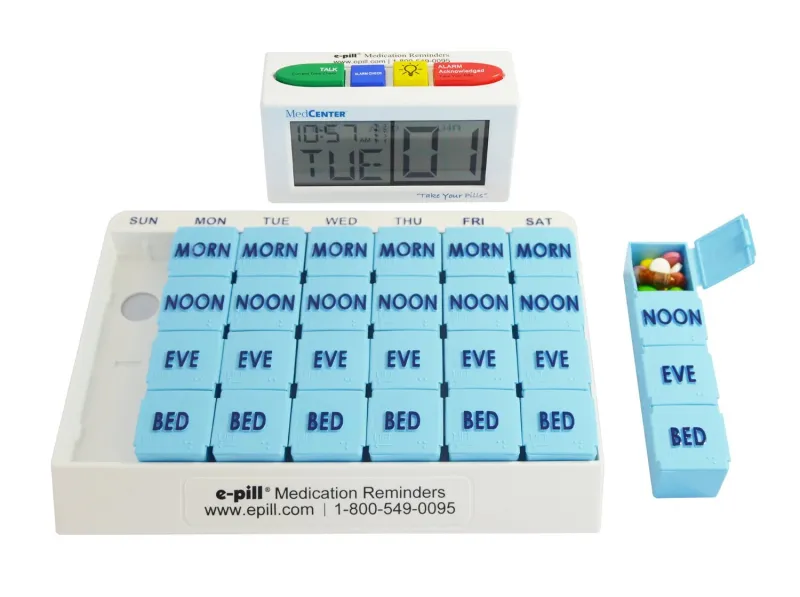
Photo: person organizing daily medication pill organizer with clock on table, via s.turbifycdn.com
There is a widespread assumption in American healthcare that the most important thing about taking a medication is simply taking it. Get it in your system, and the rest will follow. This assumption is understandable — and it is frequently wrong.
The timing of when you take a medication, relative to meals, relative to other drugs, and relative to your body's own internal clock, can meaningfully affect how much of the drug actually reaches your bloodstream, how long it stays active, how well it manages your condition, and how severe any side effects turn out to be. For some medications, the difference between optimal and suboptimal timing is modest. For others, it is the difference between a treatment that works and one that appears not to.
What follows is a practical, evidence-grounded guide to medication timing — organized around the questions patients most commonly have and the scenarios where timing decisions carry the most clinical weight.
Why Your Body's Internal Clock Affects Drug Performance
Human physiology is not static across a 24-hour period. Blood pressure, hormone levels, kidney filtration rates, gastric acid secretion, and immune activity all follow predictable rhythms tied to the sleep-wake cycle. Pharmacologists call the study of how these rhythms interact with drug behavior chronopharmacology, and it has produced some findings that should change the way patients think about their daily medication routines.
Blood pressure, for example, typically rises sharply in the early morning hours — a pattern associated with the elevated risk of heart attacks and strokes that occurs during that window. Research published in major cardiovascular journals has found that certain antihypertensive medications, particularly those in the calcium channel blocker and ACE inhibitor classes, may provide superior 24-hour blood pressure control when taken at bedtime rather than in the morning. The medication is active during the hours when blood pressure is doing its most dangerous work.
Similarly, cholesterol-lowering statins are often recommended for evening use because the liver produces the most cholesterol overnight. Taking a statin in the evening puts the drug's peak activity in alignment with peak cholesterol synthesis — a straightforward example of letting biology inform scheduling.
These are not obscure findings. They are recommendations embedded in prescribing guidelines. Yet many patients are never told about them, and many prescriptions are written without timing-specific instructions because the prescriber assumes the patient will figure it out or that it doesn't matter much either way.
The Food Factor: When Eating Changes Everything
The relationship between food and medication absorption is one of the most practically important — and most frequently misunderstood — aspects of drug timing.
Food can decrease absorption. Thyroid medications, particularly levothyroxine, are among the most sensitive. They should be taken on an empty stomach, typically 30 to 60 minutes before breakfast, because even modest amounts of food — especially calcium-rich foods like dairy — can significantly reduce the amount of drug that enters the bloodstream. Patients who take levothyroxine with breakfast and wonder why their thyroid levels are unstable may have found their answer.
Food can increase absorption. Some medications are actually designed to be taken with food because fat or protein in the stomach enhances their uptake. Certain antifungal medications, some HIV antiretrovirals, and fat-soluble vitamins fall into this category. Taking them on an empty stomach doesn't just cause nausea — it may mean the drug is substantially less effective.
Food can change the side effect profile. Metformin, one of the most commonly prescribed diabetes medications in the United States, causes gastrointestinal discomfort in a significant number of patients. That discomfort is considerably reduced when the medication is taken with a meal. For many patients, this single adjustment is the difference between tolerating the drug and abandoning it.
Grapefruit is in a category of its own. This bears repeating because it surprises patients every time: grapefruit and grapefruit juice interact with a substantial number of common medications — including certain statins, calcium channel blockers, immunosuppressants, and some psychiatric medications — by inhibiting an enzyme in the gut that normally breaks down the drug. The result is that more of the medication enters the bloodstream than intended, effectively amplifying the dose. This interaction can persist for 24 hours after consuming grapefruit. If you take any of these medications, your pharmacist at PillsDrop can confirm whether grapefruit is a concern for your specific regimen.
Antibiotic Timing: Precision Matters More Than Convenience
Antibiotics operate on a different timing logic than most other medications. Their effectiveness depends on maintaining consistent drug concentrations in the bloodstream that are high enough to inhibit bacterial growth but stable enough to avoid unnecessary side effects.
When a prescription says "take every 8 hours," it means every 8 hours — not three times during the hours you happen to be awake. Patients who take their morning, noon, and evening doses at 7 a.m., noon, and 10 p.m. are creating a 12-hour gap between their last two doses. For time-sensitive antibiotics, this allows drug levels to drop below therapeutic thresholds and gives bacteria a window to recover and potentially develop resistance.
If a truly even spacing schedule is incompatible with your daily routine, speak with your pharmacist. There may be an extended-release formulation available, or a dosing adjustment that better fits your life without compromising the treatment.
A Practical Timing Checklist for Your Next Prescription Delivery
When your next medication arrives from PillsDrop, work through these questions before establishing your dosing routine:
- Does this medication have a preferred time of day? Ask your pharmacist whether morning or evening dosing is recommended, and why.
- Should I take this with food, without food, or does it not matter? Do not assume the label covers this adequately — it often doesn't.
- Are there foods or beverages I should avoid near the time I take this? Grapefruit, dairy, high-fiber foods, and alcohol all interact with specific drug classes.
- If I take multiple medications, how much time should I leave between them? Some drugs compete for the same absorption pathways and should be spaced apart.
- What should I do if I miss a dose? The answer varies by medication — for some, taking it as soon as you remember is appropriate; for others, doubling up is dangerous.
- Does this medication need to be taken at the same time every day, or is flexibility acceptable? Consistency matters more for some drugs (hormonal medications, blood thinners) than for others.
How PillsDrop Can Help You Build a Smarter Routine
When a new prescription arrives at your door, it comes with the potential for a brief but meaningful pharmacist consultation. This is an opportunity to establish a timing plan that accounts for your specific schedule, your other medications, and your dietary habits — not just the generic instructions on the label.
For patients managing multiple chronic conditions, the timing puzzle can become genuinely complex. Blood pressure medications, diabetes drugs, thyroid supplements, and cholesterol treatments each have their own optimal windows, and they don't always fit together neatly without some deliberate planning. A pharmacist who has visibility into your complete medication list is positioned to help you sequence your doses in a way that maximizes the benefit of each one.
The medications you receive are carefully formulated. Delivering them at the right moment in your day is the final step in making sure that formulation does what it was designed to do.