Brand Name vs. Generic: The Science Behind the Switch and When to Question It
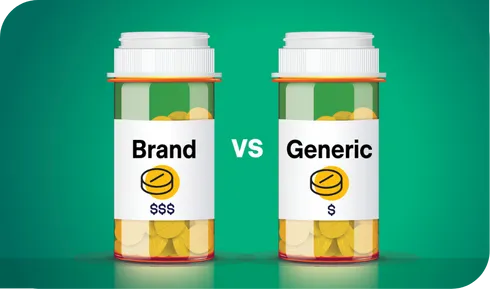
Photo: brand name and generic prescription pill bottles side by side comparison, via serveyourx.com
The moment arrives at nearly every pharmacy counter and in nearly every medication delivery confirmation email: your brand-name prescription has been substituted with a generic alternative, often at a fraction of the cost. For the majority of patients, this substitution is straightforward and safe. For others, it raises genuine questions that deserve genuine answers.
The challenge is that public understanding of generic medications tends to fall into one of two camps — either uncritical acceptance or reflexive suspicion — when the reality is considerably more nuanced. Understanding what the FDA actually requires of generic drugs, and where the legitimate exceptions to interchangeability exist, puts patients in a far stronger position to make informed decisions about their own care.
What the FDA Actually Requires for Generic Approval
A generic medication is not simply a cheaper copy of a brand-name drug. To receive FDA approval, a generic must meet a specific scientific standard called bioequivalence. This means the generic formulation must deliver the same active ingredient to the bloodstream at essentially the same rate and in the same amount as the original brand-name product.
The FDA defines bioequivalence using a specific statistical window: the generic's absorption profile must fall within 80 to 125 percent of the brand-name drug's profile, measured across a population of test subjects. In practice, most approved generics fall much closer to 100 percent — the 80 to 125 range represents the outer boundary of acceptable variation, not the typical result.
Generics are permitted to differ from their brand-name counterparts in inactive ingredients — the fillers, binders, dyes, and coatings that give a pill its physical form. These excipients do not affect the drug's therapeutic action in most patients. They are, however, the source of some legitimate patient concerns, which we will address shortly.
Why Generics Cost So Much Less
The price difference between brand-name and generic medications is not a reflection of quality. It is a reflection of development costs.
Pharmaceutical companies that develop original drugs invest years of research, clinical trials, and regulatory submissions before a medication reaches market. Patent protection allows them to recoup that investment by selling exclusively for a defined period — typically around 20 years from the patent filing date, though the effective market exclusivity period is often shorter by the time a drug is approved.
Once that patent expires, other manufacturers can produce the same active ingredient without repeating the original research investment. They still must demonstrate bioequivalence to the FDA, but they are not starting from scratch scientifically. That dramatically lower development cost translates directly to lower prices for consumers.
For patients filling prescriptions through a delivery service like PillsDrop, generic substitution frequently represents meaningful long-term savings — particularly for medications taken chronically, such as blood pressure drugs, statins, or diabetes medications.
When Patients Genuinely Respond Differently
For the vast majority of medications, bioequivalent means interchangeable in practice as well as on paper. However, there is a specific category of drugs for which even small variations in absorption can have clinically significant consequences. These are called narrow therapeutic index (NTI) medications.
Narrow therapeutic index drugs are those for which the difference between an effective dose and a toxic or subtherapeutic dose is very small. The blood thinner warfarin is a classic example. So is levothyroxine, used to treat thyroid disorders. Certain anti-seizure medications, including phenytoin and carbamazepine, also fall into this category.
For a patient stabilized on a specific formulation of an NTI drug — whether brand or generic — switching to a different manufacturer's version, even one that is FDA-approved as bioequivalent, can occasionally produce measurable changes in drug levels. This is not a failure of the bioequivalence standard; it reflects the mathematical reality that small permitted variations can have outsized effects at the narrow end of the therapeutic window.
If you take an NTI medication, it is worth discussing consistency of manufacturer with your pharmacist. Many delivery pharmacies can note a preference in your profile for a specific generic manufacturer, providing greater stability even when brand-name prescribing is not medically necessary.
The Inactive Ingredient Factor
For most patients, the excipients in a generic formulation are genuinely irrelevant. For a smaller subset, they matter.
Patients with documented allergies or sensitivities to specific dyes, lactose, gluten-containing fillers, or other inactive components may experience reactions to a generic formulation that contains ingredients their previous medication did not. This is not a placebo effect or a general sensitivity to generics — it is a specific reaction to a specific ingredient.
If you have known allergies or intolerances, it is worth asking your delivery pharmacy to review the inactive ingredient list of any generic substitution before it ships. This is a reasonable, medically grounded request that a pharmacist can assist with.
The Nocebo Effect Is Also Real
It would be incomplete to discuss patient responses to generics without acknowledging the nocebo effect — the well-documented phenomenon in which negative expectations about a treatment produce negative experiences, independent of the treatment's pharmacological action.
Studies have shown that patients who are told they are receiving a generic medication report more side effects than patients given the same medication without that information. This does not make those experiences less real to the patient, but it does mean that some reported differences between brand-name and generic medications reflect psychological expectation rather than pharmacological distinction.
This is not a reason to dismiss patient concerns. It is a reason to approach those concerns with both empathy and scientific context — and to distinguish between experiences that warrant clinical investigation and those that may resolve with time and reassurance.
When to Push Back on a Generic Substitution
There are specific circumstances in which requesting a brand-name medication — or at minimum, raising the question with your provider — is medically reasonable.
You are taking a narrow therapeutic index medication and have been stable on a specific formulation for an extended period. A change in manufacturer, even to another FDA-approved generic, may warrant a conversation with your prescriber and follow-up monitoring.
You have documented allergies to inactive ingredients present in the substituted generic but not in your previous formulation. Ask your pharmacist to verify the excipient list.
You experienced a well-documented adverse event or loss of efficacy that coincided specifically with a switch in formulation, and that resolved when you returned to the original. This pattern, particularly if it recurred across multiple switches, is worth documenting and discussing with your physician.
When Saving Money Is Genuinely Safe
For the majority of medications — including most antibiotics, many blood pressure drugs, common statins, most antidepressants in standard doses, and a wide range of other chronic and acute medications — FDA-approved generic substitution is safe, effective, and financially sensible.
If you are not taking an NTI medication, do not have relevant inactive ingredient sensitivities, and have not experienced a documented pattern of differential response, accepting a generic substitution is unlikely to compromise your treatment outcomes in any meaningful way.
At PillsDrop, we believe patients deserve honest, evidence-based guidance on these decisions — not reflexive reassurance that everything is identical, and not alarmist suggestions that generics are inherently suspect. The science is clear on what generics are, and equally clear on where the genuine exceptions lie. Knowing the difference is what allows you to advocate for yourself effectively.