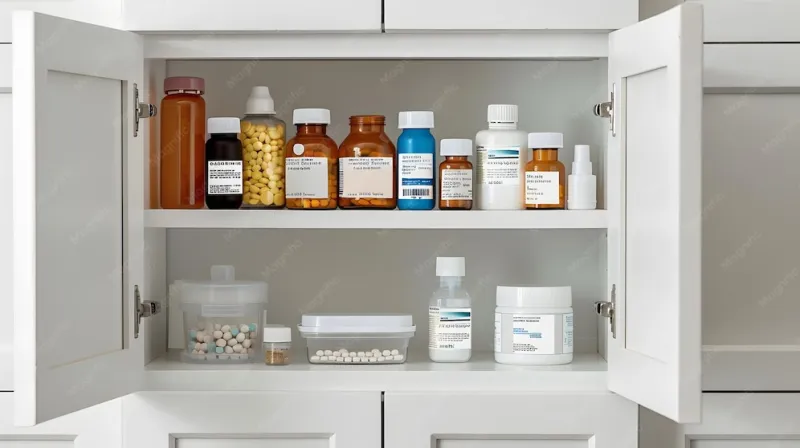
When the Label Gets It Wrong: How Pharmacy Packaging Errors Put Patients at Risk
The Prescription Bottle You Probably Never Read Carefully Enough
Most people pick up a prescription, glance at the label, and tuck the bottle away without a second thought. The assumption is simple: the pharmacy got it right. But a growing body of evidence suggests that assumption carries real risk. According to data from the National Coordinating Council for Medication Error Reporting and Prevention, labeling and packaging issues account for a significant share of the roughly 1.5 million preventable medication errors that occur in the United States every year.
Those numbers are not abstract. Behind each statistic is a patient who took twice the intended dose because the label read "1-2 tablets" without specifying a maximum daily limit, or someone who combined two prescriptions without realizing the instructions conflicted. At PillsDrop, where we handle prescription deliveries with pharmacist oversight built into every order, we see firsthand how clarity — or the absence of it — shapes patient outcomes.
What Makes a Label Dangerous
Pharmacy labels are dense by design. They must convey the drug name, dosage strength, prescribing physician, dispensing date, refill count, and usage instructions — all within a few square inches of adhesive paper. The problem is that brevity often breeds ambiguity.
Consider the phrase "take as directed." It appears on more prescription bottles than most patients would expect, and it essentially transfers the burden of remembering verbal instructions entirely to the patient. For someone managing multiple chronic conditions, juggling several medications, or dealing with early cognitive decline, that phrase offers almost no practical guidance.
Font size is another underappreciated issue. The American Society of Health-System Pharmacists recommends a minimum 12-point font for critical label information, yet many retail and mail-order pharmacies still use type so small that older adults — the demographic most likely to take multiple medications — struggle to read it without magnification.
Then there is the matter of look-alike and sound-alike drug names. Hydroxyzine and hydroxyurea. Metformin and metronidazole. Lamictal and Lamisil. These pairs have caused documented, serious errors when labels were printed with insufficient visual distinction between them.
Real Patients, Real Consequences
Consider the experience of a retired teacher in Ohio who was prescribed metoprolol succinate, an extended-release beta-blocker, following a cardiac event. Her pharmacy inadvertently dispensed metoprolol tartrate — a shorter-acting formulation — without updating the label instructions. She continued taking one tablet daily as the label stated, not realizing the tartrate version required twice-daily dosing to achieve equivalent blood pressure control. It took three weeks and a follow-up cardiology appointment to identify the discrepancy.
In another widely reported case, a patient managing Type 2 diabetes received a bottle labeled with the correct drug name but an incorrect concentration. The prescriber had ordered a 500 mg formulation; the dispensed product was 1,000 mg. The patient, trusting the label, took his usual two tablets — effectively quadrupling his intended dose.
These are not isolated incidents. A 2020 analysis published in the Journal of the American Pharmacists Association found that labeling-related errors represented nearly 33 percent of all medication mistakes reported to the FDA's MedWatch program during the study period.
What Expert Pharmacists Say You Should Demand
Licensed pharmacists consistently emphasize one piece of advice above all others: ask questions before you leave — or before you accept a delivery.
"Every patient has the right to a full consultation," says a clinical pharmacist with more than 15 years of experience in community pharmacy practice. "If anything on that label is unclear, that is not a minor inconvenience. That is a patient safety moment."
At the structural level, pharmacists advocate for plain-language labeling — instructions written at a sixth-grade reading level, with explicit dosing times rather than vague intervals. Several states, including California and New York, have already moved toward standardized label formats following campaigns by patient advocacy groups. Federal momentum, however, has been slower.
For patients using delivery services, the standard should be no different. A reputable pharmacy delivery platform will include a pharmacist contact option, package inserts, and clear escalation paths for questions. If your delivery arrives with a label you cannot fully interpret, that gap needs to be closed before the first dose is taken.
A Practical Checklist Before You Take Your First Dose
Whether you are picking up at a counter or receiving medication at your door, run through the following verification steps:
Confirm the basics:
- Is your full name spelled correctly on the label?
- Does the drug name match what your doctor prescribed?
- Is the dosage strength exactly what was discussed?
Review the instructions:
- Are the directions specific — time of day, with or without food, with water?
- Is a maximum daily dose listed if the prescription is "as needed"?
- Are there any interaction warnings or foods to avoid?
Cross-reference your other medications:
- Have you informed your pharmacy of every medication you currently take, including over-the-counter supplements?
- Does the new prescription conflict with anything already in your medicine cabinet?
Check the packaging:
- Is the seal intact?
- Does the pill's appearance — color, shape, imprint — match what you have received before, if this is a refill?
- Is the expiration date clearly printed and not imminent?
When in doubt:
- Call your pharmacist. Every dispensing pharmacy is required to provide consultation access.
- Use a drug interaction checker tool before combining new prescriptions.
- Ask for a printed medication guide if one is available for your drug.
The Delivery Difference
Medication delivery services like PillsDrop introduce an important variable: the pharmacist is not physically present at the moment you open the package. That reality makes pre-shipment verification all the more critical. Our fulfillment process includes a pharmacist review of every order before it leaves our facility, and each delivery includes a summary card with plain-language dosing instructions alongside the standard label.
Still, patients bear a meaningful share of the responsibility. An informed recipient is the last line of defense against labeling errors that may have slipped through earlier checkpoints. Treating your prescription label as a document worth scrutinizing — not just a formality — is a habit that can prevent serious harm.
The Bottom Line
Pharmacy labels are small, but their implications are large. Confusing instructions, microscopic type, and look-alike drug names have contributed to preventable injuries and hospitalizations across the country. The good news is that patients who know what to look for are substantially better protected. Before you swallow that first pill, take sixty seconds to verify what is on the bottle. Your health is worth that pause.