Telehealth or the Doctor's Office? A Practical Guide to Getting Your Prescription Without the Runaround
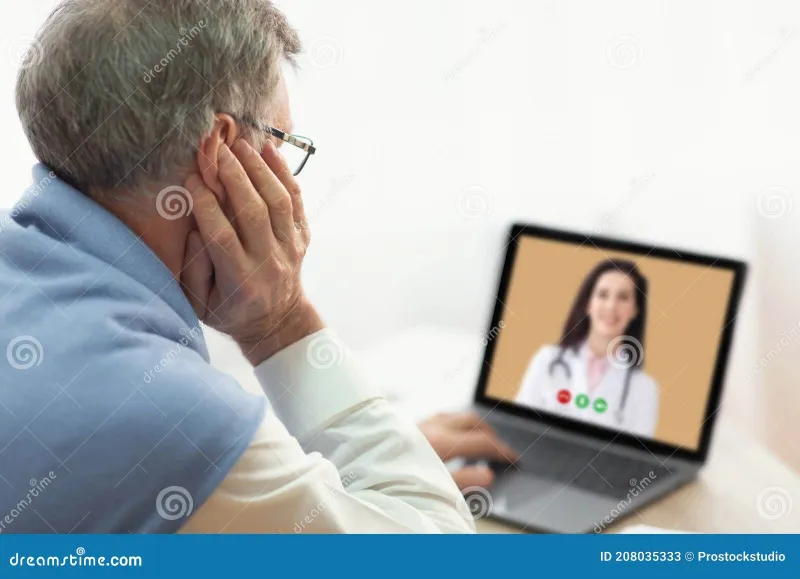
Photo: patient having telehealth video call with doctor on laptop at home, via thumbs.dreamstime.com
Two Paths to the Same Prescription — But They Are Not Equal
For millions of Americans, getting a prescription used to mean one thing: scheduling a doctor's appointment, taking time off work, sitting in a waiting room, and hoping the visit lasted long enough to address everything on the list. Telehealth changed that calculus significantly, and the acceleration of virtual care during the COVID-19 pandemic permanently shifted how a large segment of the population accesses medical services.
But the widespread availability of telehealth does not mean it is always the right tool. The choice between a virtual visit and an in-person appointment has real consequences — for diagnostic accuracy, prescription appropriateness, insurance reimbursement, and ultimately, how quickly you receive the medication you need. At PillsDrop, we work within both pathways every day, and the question we hear most often from patients is straightforward: which route is actually faster, and which one gets me the right prescription?
The honest answer depends on what you need.
When Telehealth Genuinely Wins
For a well-defined, previously diagnosed condition, a virtual visit is almost always the faster path. Consider a patient who has been managing seasonal allergies for a decade, or someone who needs a monthly refill of a stable antidepressant. In these cases, the prescribing decision is largely informational — the physician needs to confirm that nothing has changed, review any new symptoms, and authorize the refill. That exchange takes ten to fifteen minutes over video and does not require a stethoscope.
Telehealth platforms in the United States have matured considerably since 2020. Services such as Teladoc, MDLive, and a growing number of specialty platforms can connect patients with licensed physicians, nurse practitioners, or physician assistants in under an hour, in many cases. For straightforward prescriptions — antibiotics for a confirmed urinary tract infection, oral contraceptives, migraine medications, or maintenance drugs for chronic conditions — the turnaround from appointment to prescription transmission can be measured in minutes, not days.
When paired with a delivery service like PillsDrop, the entire process — consultation, prescription, fulfillment, and doorstep delivery — can be completed without a single trip outside the home. For patients with mobility limitations, demanding work schedules, or those living in rural areas where the nearest pharmacy is a significant drive, that seamlessness is not a convenience. It is a meaningful improvement in healthcare access.
Telehealth tends to work well for:
- Prescription refills for stable, chronic conditions
- Uncomplicated infections with clear symptom profiles
- Mental health medication management (in many states)
- Dermatological concerns that can be assessed via photograph
- Contraception consultations
- Smoking cessation prescriptions
When the Doctor's Office Is Non-Negotiable
The efficiency of telehealth has limits, and those limits matter. Certain conditions simply cannot be assessed through a screen. A physician who suspects a cardiac arrhythmia needs to listen to your heart. A dermatologist evaluating a suspicious lesion needs to examine it under proper lighting. An orthopedic concern requires physical manipulation of the affected joint. In these scenarios, a virtual visit does not just slow things down — it can lead to an incorrect diagnosis and, by extension, a prescription that does not address the actual problem.
There is also the matter of new prescriptions for controlled substances. Under the Ryan Haight Online Pharmacy Consumer Protection Act, prescribing Schedule II through V controlled substances via telemedicine — including stimulants for ADHD and opioids for pain management — generally requires an in-person evaluation at least once before a virtual prescribing relationship can be established. The DEA's telehealth prescribing rules have been a subject of ongoing regulatory discussion since the pandemic-era flexibilities were introduced, but for now, patients seeking these medications for the first time should plan for an in-person visit.
Additionally, patients presenting with new, unexplained symptoms — particularly those involving chest discomfort, neurological changes, sudden weight loss, or persistent fatigue — warrant an examination that telehealth cannot replicate. Choosing a virtual visit in those situations to save time is a trade-off that may delay a diagnosis with serious implications.
In-person visits remain essential for:
- First-time evaluations of new or unexplained symptoms
- Conditions requiring physical examination or diagnostic testing
- Initial prescriptions for most controlled substances
- Pediatric evaluations for complex or evolving conditions
- Pre-surgical consultations or post-operative follow-up
The Insurance Question Nobody Warns You About
Insurance coverage for telehealth visits varies more than most patients expect, and the gap between what you assume is covered and what actually is can result in a surprising bill.
During the public health emergency, the federal government required Medicare and most private insurers to cover telehealth visits at parity with in-person care. Some of those provisions have been extended, but not all. As of 2024, Medicare telehealth parity for certain services has been extended through the end of 2024 under continuing resolutions, but the long-term picture remains subject to Congressional action.
For patients with private insurance, coverage depends heavily on the specific plan. Many large employers have expanded telehealth benefits as a cost-containment strategy, but high-deductible health plans may still apply the full deductible to virtual visits before coverage kicks in. Some insurers distinguish between telehealth visits on their own platform versus third-party services, which can affect reimbursement rates.
The practical advice: call your insurer before booking a virtual visit for a new concern, and confirm whether your telehealth provider is in-network. Out-of-pocket costs for an out-of-network telehealth visit can exceed what you would pay for a co-pay at your primary care physician's office.
Prescription Delivery: The Common Thread
Regardless of which route you take to obtain a prescription, what happens after the prescription is written is increasingly consistent. Electronic prescribing — e-prescribing — is now standard practice in nearly every state, meaning the prescription is transmitted directly from your provider to a pharmacy of your choice. That pharmacy can be a brick-and-mortar location down the street or a delivery service like PillsDrop.
For patients using telehealth, delivery services represent a natural extension of the virtual care model. You complete the visit from home, the prescription is sent electronically, and the medication arrives at your door — often within one to two business days for standard prescriptions, with expedited options available in many service areas. For in-person visits, the same delivery option applies; patients simply designate their preferred pharmacy at the time of the appointment.
The key consideration for delivery timelines is whether your medication requires prior authorization from your insurer. Prior authorization — a process by which the insurer must approve a prescription before it will cover the cost — can add two to five business days to fulfillment regardless of the prescribing route. If your physician prescribes a brand-name drug when a generic is available, or a higher-cost medication when alternatives exist, expect the possibility of a delay.
Making the Decision That Fits Your Situation
A useful framework for deciding between telehealth and an in-person visit starts with a single question: Have I been evaluated and treated for this condition before?
If yes, and if your condition is stable, telehealth is almost certainly the faster and equally appropriate option. If no — or if something has changed significantly — an in-person evaluation is the more responsible starting point, even if it takes longer.
For patients managing multiple chronic conditions, establishing a primary care relationship that includes both in-person and virtual touchpoints offers the best of both worlds: a physician who knows your history available for telehealth refill visits, with the option to come in when something new arises.
However you reach your prescription, PillsDrop is designed to be the final step that removes friction from the process entirely. Because the fastest prescription in the world does not help you if getting it filled requires another errand.