When Convenience Becomes Costly: A Critical Look at Auto-Refill Programs and How to Take Back Control

The pitch is straightforward: enroll your prescriptions in automatic refills, never worry about running out, and let the pharmacy handle the logistics. It is a reasonable value proposition, and for a specific category of patient — someone on stable, long-term medications with consistent dosing and no anticipated changes — it can work exactly as advertised.
For a broader swath of patients, however, the reality is messier. Auto-refill programs, including the subscription-style models offered by an expanding number of pharmacy services, operate on a logic of regularity that does not always match the reality of how people actually take medications. The result, for many households, is a slow accumulation of unused pills, charges for medications that are no longer prescribed, and a growing gap between what the pharmacy believes you need and what your physician actually intends.
This is not a problem unique to any one pharmacy model. It is a structural feature of how automatic systems interact with the inherent variability of human health — and it is worth understanding before you opt in.
How Auto-Refill Systems Actually Work
When you enroll a prescription in an auto-refill program, the pharmacy's system calculates a projected run-out date based on the day's supply dispensed and the fill date. As that projected date approaches — typically 7 to 14 days before estimated depletion — the system automatically initiates a new fill and, depending on the program, either charges your payment method or queues the prescription for pickup or delivery.
The core assumption embedded in this model is that you are taking your medication exactly as prescribed, every day, without interruption. That assumption is violated more often than most patients or pharmacies acknowledge.
Perhaps you were hospitalized and your medication was managed in-house for two weeks. Perhaps your physician reduced your dose from twice daily to once daily, effectively doubling your supply duration. Perhaps you experienced a side effect and stopped taking the medication while waiting for a follow-up appointment. In each of these scenarios, the auto-refill system does not know what happened. It continues dispensing on schedule, and the charges and bottles continue to arrive.
The Accumulation Problem
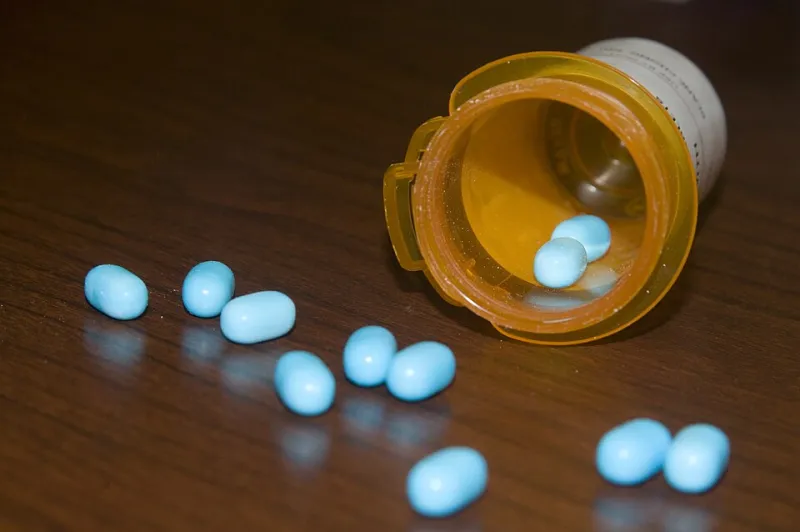
Medication accumulation — the buildup of unused prescription drugs in the home — is a more significant problem than it appears on the surface.
From a financial perspective, patients enrolled in auto-refill programs frequently pay for medications they never use. A 30-day supply that is refilled every 28 days creates a two-day surplus per cycle. Over a year, that is roughly 24 days of medication paid for and never consumed. For an expensive specialty drug, that surplus represents real money. For a less expensive generic, the individual cost is smaller but the pattern is the same.
From a safety perspective, accumulated medications in the home create risk. Households with children or adolescents face elevated exposure risk from stockpiled controlled substances. Elderly patients managing multiple prescriptions may become confused about which bottle is current, particularly when multiple fills of the same medication are stored together. And medications that are discontinued but not removed from the auto-refill queue can be accidentally taken long after the prescribing physician intended the course to end.
The CDC has documented the role of household medication stockpiles in accidental poisoning and opioid misuse. While the problem is not limited to auto-refill programs, the mechanics of automatic dispensing can accelerate accumulation in ways that manual refill management does not.
When Dosage Changes Break the System
Of all the scenarios in which auto-refill programs create problems, dosage changes are among the most common and least visible.
Consider a patient prescribed 10mg of a daily medication. The physician, at a follow-up visit, increases the dose to 20mg. The patient now takes two tablets per day instead of one. The prescription is updated, and the patient may even pick up the new prescription manually. But if the old 10mg prescription is still enrolled in auto-refill — and no one explicitly cancels it — the system will continue to dispense it on its original schedule.
The patient now has two prescriptions for the same medication arriving at different intervals, creating confusion about which is current, potential for double-dosing, and charges for a prescription that should no longer exist.
This scenario is not hypothetical. Pharmacists who work in high-volume dispensing environments report encountering it regularly. The burden of managing the administrative consequence of a clinical change falls on the patient, who may not understand that updating a prescription with the physician does not automatically update the auto-refill queue at the pharmacy.
Auditing Your Own Refill Pattern
If you are enrolled in auto-refill programs — whether through a delivery pharmacy, a retail chain, or a subscription model — the following framework can help you identify whether the system is working for you or against you.
Step one: Inventory what you actually have. Pull out all current medications and check the bottle counts. If any medication has more than a 30-day supply on hand without a clinical reason (such as a recent 90-day fill), that is a signal worth investigating.
Step two: Cross-reference your current prescriptions with your auto-refill enrollment. Log into your pharmacy account or call your pharmacist and request a list of every prescription currently enrolled in automatic refill. Compare that list against your current active prescriptions as documented by your physician. Any medication that appears in the pharmacy's auto-refill queue but not on your current medication list from your provider warrants immediate attention.
Step three: Check fill dates against your actual consumption. For each medication in auto-refill, note when the last fill arrived and estimate how much you have actually used. If you are consistently running ahead — receiving new fills before the prior bottle is finished — the refill interval may be calibrated too aggressively.
Step four: Communicate changes promptly. Whenever your physician changes a dose, discontinues a medication, or adds a new prescription, make it a habit to contact your pharmacy on the same day and update your auto-refill settings accordingly. Do not assume the system will receive that information automatically.
Reclaiming Convenience Without Sacrificing Control
The goal here is not to argue against auto-refill programs categorically. For patients on stable regimens, they serve a genuine purpose — reducing the cognitive load of medication management and preventing the kind of supply gaps that lead to missed doses and avoidable health events.
The goal is to advocate for an informed, active relationship with whatever system you use.
At PillsDrop, we support patients in configuring refill schedules that reflect their actual medication use rather than a system default. Our pharmacist team can review your current auto-refill enrollments, flag prescriptions that may be generating unnecessary fills, and help you set intervals that align with your clinical reality rather than a calendar algorithm.
We also encourage patients to use refill notifications as a checkpoint rather than a passive trigger. When a refill alert arrives, take 30 seconds to confirm that the medication is still prescribed, the dose is current, and you actually need the refill before approving it. That small habit can prevent months of accumulation and the safety and financial consequences that come with it.
Disposal of Accumulated Medications
If you have already accumulated a stockpile of unused medications, proper disposal matters. The FDA recommends using authorized drug take-back programs as the first option — the DEA's National Prescription Drug Take Back Day occurs twice annually, and many retail pharmacies and police stations maintain year-round take-back kiosks.
For medications that cannot be taken back in person, the FDA provides guidance on safe home disposal methods, which generally involve mixing medications with an unpalatable substance (coffee grounds, dirt, or cat litter) and discarding them in a sealed container. Flushing medications — with a limited list of exceptions for certain high-risk drugs — is no longer recommended due to environmental concerns.
Convenience is a legitimate goal in medication management. But convenience that operates on autopilot, without periodic review, can quietly undermine the very health outcomes it is meant to support. A few minutes of active oversight each quarter is a reasonable trade for the peace of mind that comes with knowing your pharmacy is working with you — not simply running ahead of you.